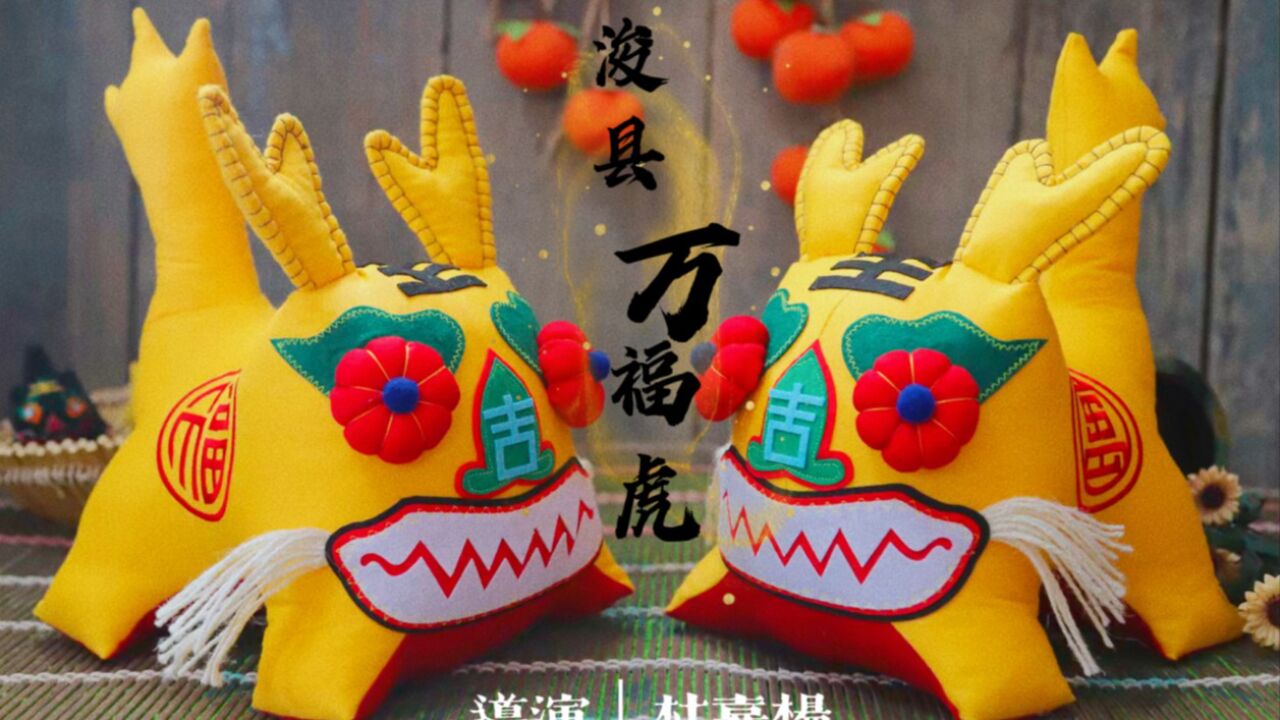
Wanfu Tiger
📍 Hebi, Henan
The Wanfu Tiger originated in the Xunxian area of Hebi City in Henan Province. As a signature example of regional folk fabric art, this craft has been passed down for centuries and earned its place on the Henan Provincial Intangible Cultural Heritage list in 2015.
This tiger is more than just a toy. It serves as an amulet and a vessel for blessings rooted in a deep cultural memory. In ancient Chinese society, the tiger was revered for its fierce protective power and was integrated into early animal worship and totemic beliefs. Over time, it became a universal symbol of strength and protection against evil, eventually evolving into the folk tradition of using the tiger to invite good fortune into the lives of children.
The name Wanfu translates to “Ten Thousand Blessings” because every stitch is meant to sew a sense of well-being into the fabric. The creation process is rigorous and orderly, involving seven distinct stages that include selecting fabric, cutting, sewing, stuffing, painting, appliqué, and embroidery. The finished tiger often possesses an expression that balances realism with playful exaggeration. It feels rugged yet refined, maintaining the raw power of rural handiwork while showcasing meticulous attention to detail. These tigers generally fall into three categories. Painted tigers feature hand-drawn facial features and floral patterns. Appliqué tigers use colorful fabric cutouts to build the eyes, ears, and mouth in layers. The embroidered tiger is the most challenging of all, requiring a sophisticated mix of straight, horizontal, vertical, and cross-stitching to make the spirit of the tiger truly stand up and come to life.
In the village of Xunxian, the story of the Wanfu Tiger is inseparable from the life of Huang Guilian. At seventy-seven years old, she is the sixth-generation inheritor of this craft and has been making these fabric tigers for over six decades. In her younger years, she would embroider by lamplight at dusk and carry her work up the mountain to sell during the day, using her needle and thread to provide food and oil for her family. Eventually, with government support and local workshops, she moved her craft from her own bedside to public tables where everyone could learn. She now uses modern equipment to increase her output while continuing to innovate. She created the “Liyang Tiger” to incorporate local regional symbols and even started a Douyin account to document her process because she fears the craft might end with her.
Her journey also has a deeply personal starting point. After her mother passed away, Huang found an old Wanfu Tiger among the belongings left behind, which served as a sudden reminder that the family legacy was still in her hands. From that moment on, she studied color palettes and stitching techniques with renewed intensity to make her tigers look as if they could truly see and understand people. For her, the Wanfu Tiger is no longer just a lucky charm. It is a lifeline that supported her family, a memory of her mother, and a knot that sews the life of the village back together for the next generation.