Luoshan Shadow Puppetry
📍 Luoshan, Henan
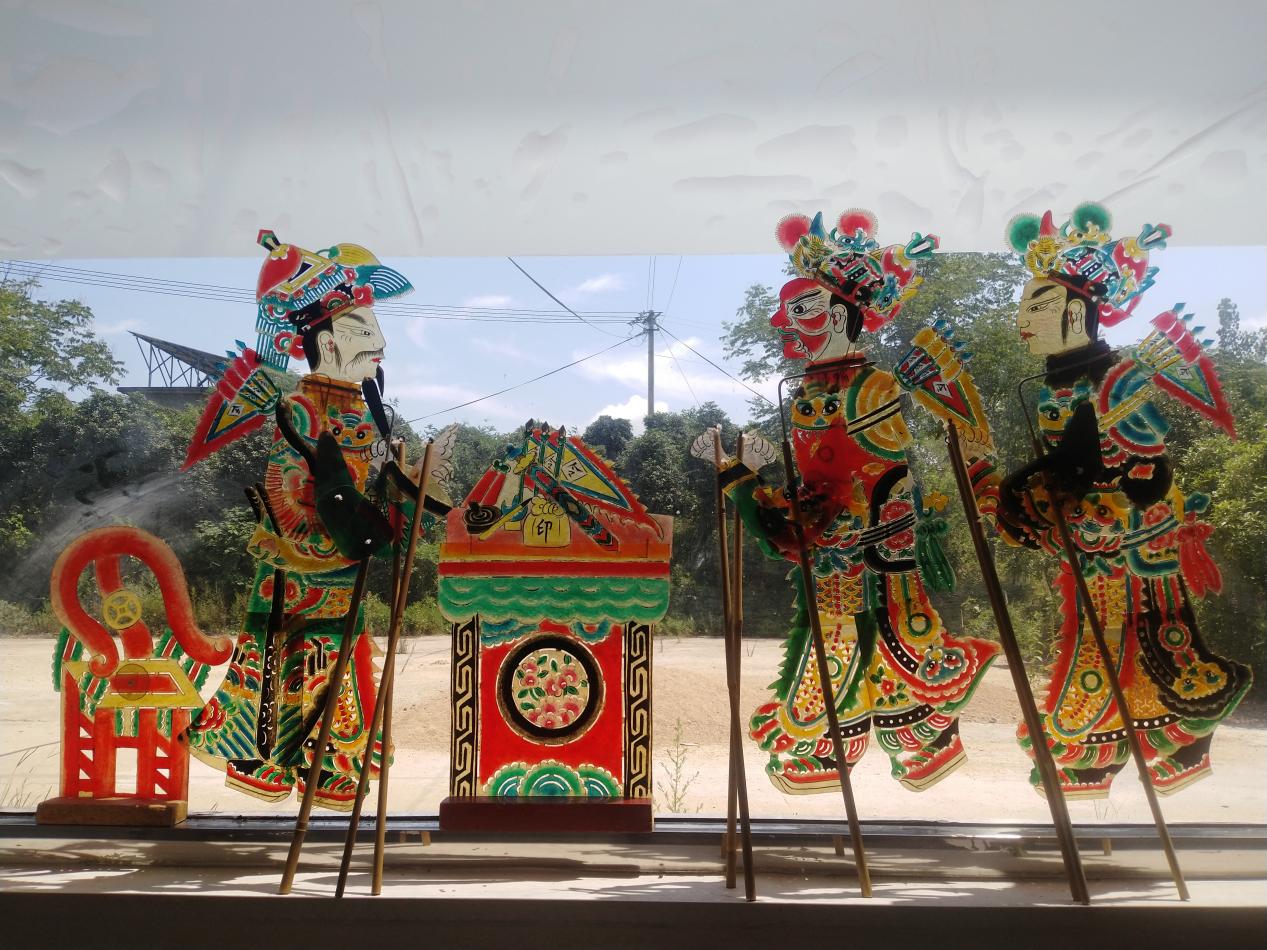
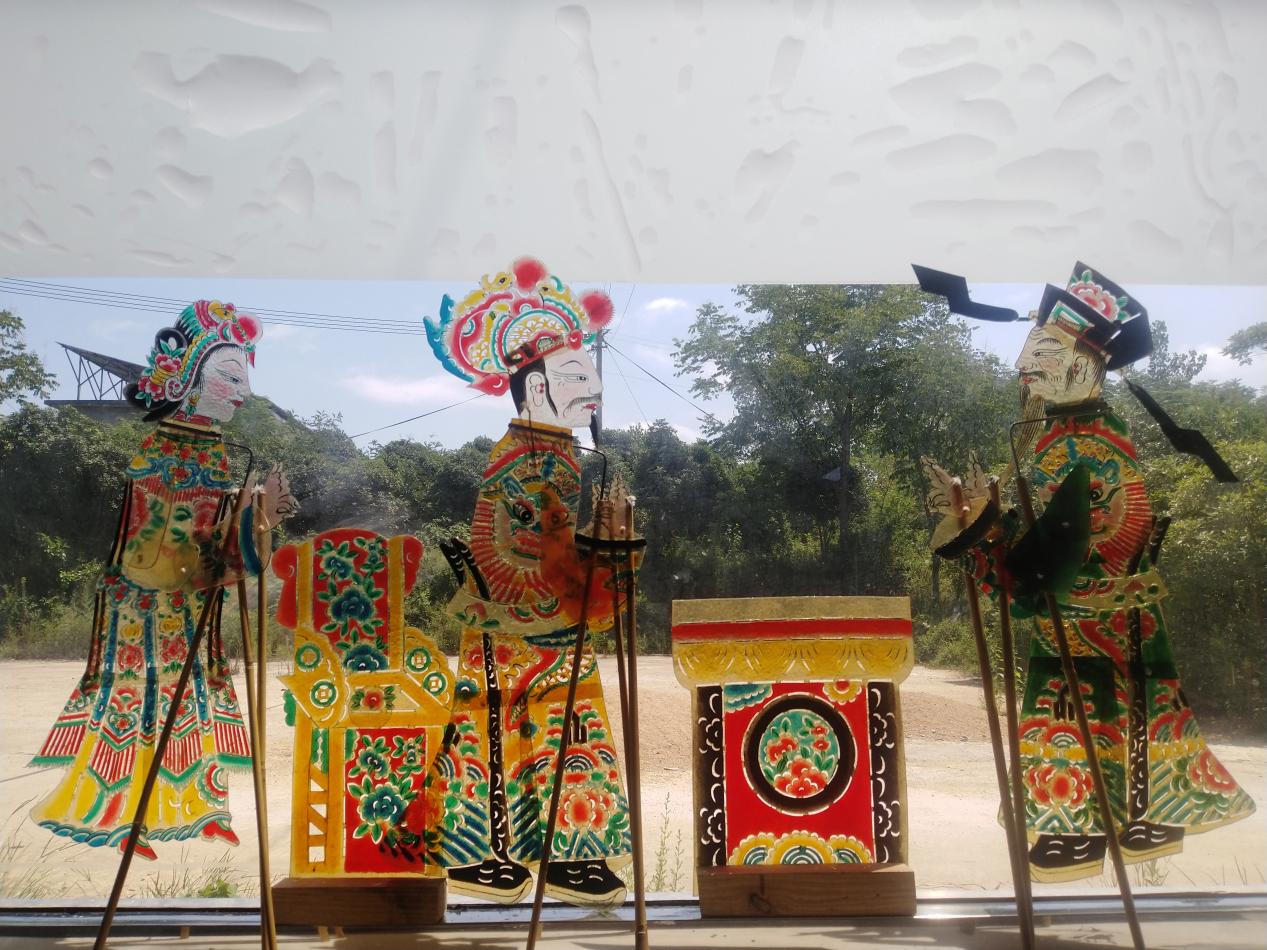
Have you ever seen a “movie” carried on a shoulder pole? A single carrying pole, a wooden chest, a white sheet, and a lamp. That’s all it takes. When the troupe arrives at a village entrance or a temple fairground, the lamp is lit, the gongs and drums strike up, and suddenly, the figures on the screen “come alive”.
Locals call this kind of troupe “Yi Dan Xiang” (One Carrying Chest). The entire theatre—props, stage, and puppets—can be hoisted onto a shoulder and carried through the streets, delivering stories right to the audience’s doorstep.
According to the Annals of Luoshan County, Luoshan Shadow Puppetry originated during the Northern Song Dynasty (Jingyou era) and flourished during the Ming and Qing Dynasties. In the late Qing period, a local artist named Zhan Guoxiang travelled to Luanchuan, Hebei, to apprentice under Su Dingshan, the imperial puppeteer for Empress Dowager Cixi. Upon returning home, Zhan passed on his skills, spreading the art form far and wide. Luoshan puppets were once sold across Anhui, Hubei, and Jiangxi, and the craft was even taken to Taiwan, bringing the techniques and regulations of the imperial court to distant stages.
Today, there are reportedly 84 of these “Yi Dan Xiang” troupes and over 760 practitioners in the region, still maintaining the itinerant tradition: “Pick up the chest, and the show can begin.”
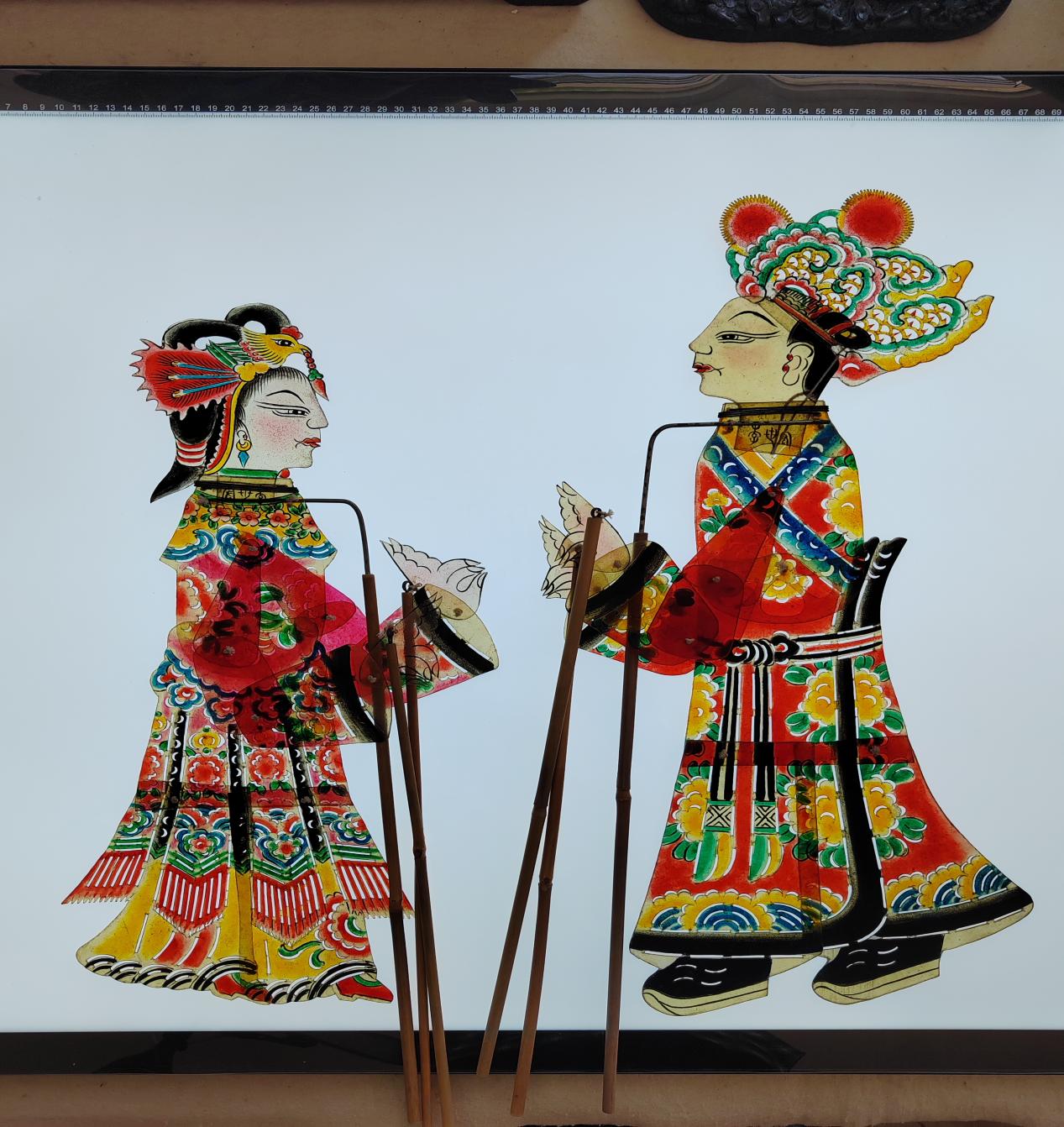
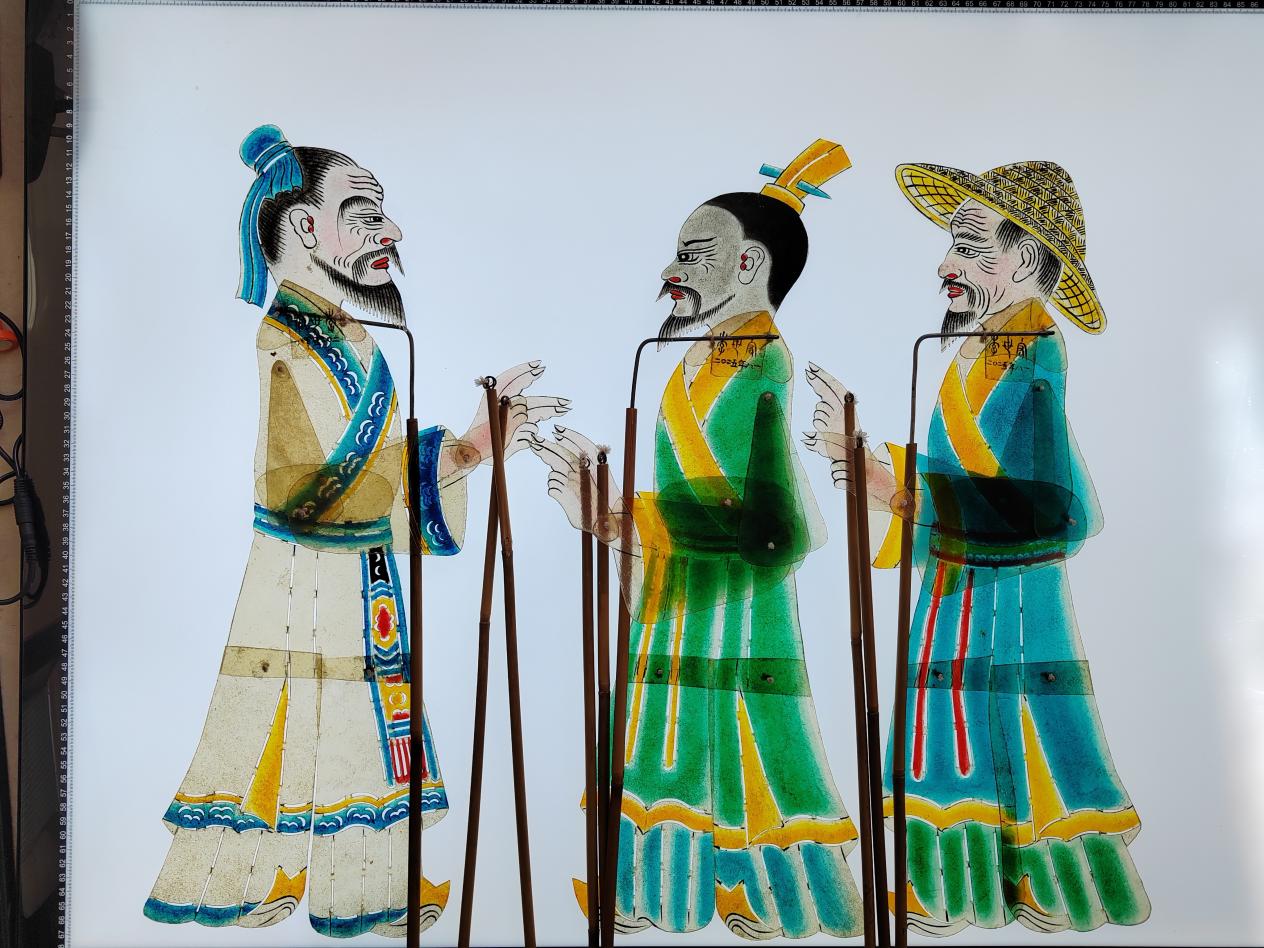
Luoshan shadow puppets are made primarily from calfskin. The crafting style emphasizes “painting over carving,” resulting in vibrant colors and bright translucency. In terms of size, there are the “Head Water Shadows” (approx. 90cm tall) and the more commonly used “Second Water Shadows” (50–60cm).
From raw hide to finished puppet, the material undergoes 12 distinct steps: skin processing, scraping/polishing, drafting, (minimal) carving, coloring, joint assembly, and attaching the control rods. Before a puppet ever hits the screen, it undergoes rigorous testing under the light to ensure every joint moves fluidly. It is a marriage of history and art: preserving local aesthetics while fixing a language of translucent color onto a piece of skin that waits for the light to wake it up.
The true spectacle lies in the hands of the performers. Behind the scenes, Luoshan Shadow Puppetry is a collaborative effort involving manipulation, lead vocals, percussion, and suona (Chinese oboe). However, it is also common to see “one person, multiple skills”—a single artist in the cramped space behind the curtain, manipulating the puppets while simultaneously directing the rhythm of the show.
Three Distinct Stage Features:
A Vast and Enduring Repertoire
Traditional “grand plays” are often drawn from classics like Investiture of the Gods, Water Margin, Generals of the Yang Family, The Cases of Judge Bao, and The Legend of Yue Fei. They also perform modern plays such as Chaoyang Gully. The performances are mostly “Zhezi Xi” (opera highlights), with titles like Dragon and Phoenix Prospering, Nezha Conquers the Sea, and Three Sons-in-Law Celebrating a Birthday remaining perennial favorites.
Intense Presence: Singing “Off-Script”
Most lead singers (masters) do not rely on a script to hold the stage. They memorize the main plotlines and the path of the play, but the lyrics and spoken parts are often improvised on the spot. Farm proverbs, jokes, slang, and allegorical sayings flow naturally. But this improvisation isn’t random; it must strictly adhere to rhyme schemes and dramatic structure—making sense while keeping the rhythm.
Strong Musicality
The “Banqiang” Beat The vocal style is primarily Banqiang (plate-and-rhythm), supplemented by fixed tunes (Qu-pai), carrying the distinct musical temperament of the Henan-Jianghuai region. The accompaniment usually features the suona and percussion. Once the gongs and drums start, the singer’s breath, the beat, and the puppet’s movements are pulled into a single thread, creating intense live tension.
The protection and spread of Luoshan Shadow Puppetry in the modern era has clear milestones:
-
2008: Recognised by the State Council as a National Intangible Cultural Heritage.
-
2011: Listed by UNESCO as Intangible Cultural Heritage of Humanity.
-
2017: Invited to Paris, France, for the “Tianya Gong Cishi” exclusive showcase, sparking a wave of interest overseas.
In terms of lineage, Chen Guanghui was named a National Heritage Representative Inheritor in 2009. He has trained over 10 apprentices, including female artist Chen Yuhua, and has pushed for shadow puppetry to enter communities and schools. The dedication of the old masters is gradually transforming into a path that the younger generation can inherit and bring into contemporary life.
Luoshan Shadow Puppetry preserves local dialects, melodies, and humor, acting as a living folk archive. It is an art of time and patience, hiding ten years of hard work in a pair of hands. But more importantly, it allows a community to share stories and emotions under a single lamp. In a rapidly changing world, it retains a cultural warmth that can be “carried on a shoulder” and passed down through the ages.
Gallery