Ren's Porcelain (Jun Ware)
Jiwei Ren, born in 1957 into a distinguished family of Jun ware artisans, is a Henan Provincial Arts and Crafts Master and Chairman of Ren’s Porcelain Tiantai Studio. As a seventh-generation Jun ware inheritor from Yuzhou, he was appointed to the expert committee for the joint exhibition of authentic and reproduced works of the Five Great Song-Dynasty Kilns, organized by the State Administration of Cultural Heritage and the Palace Museum.
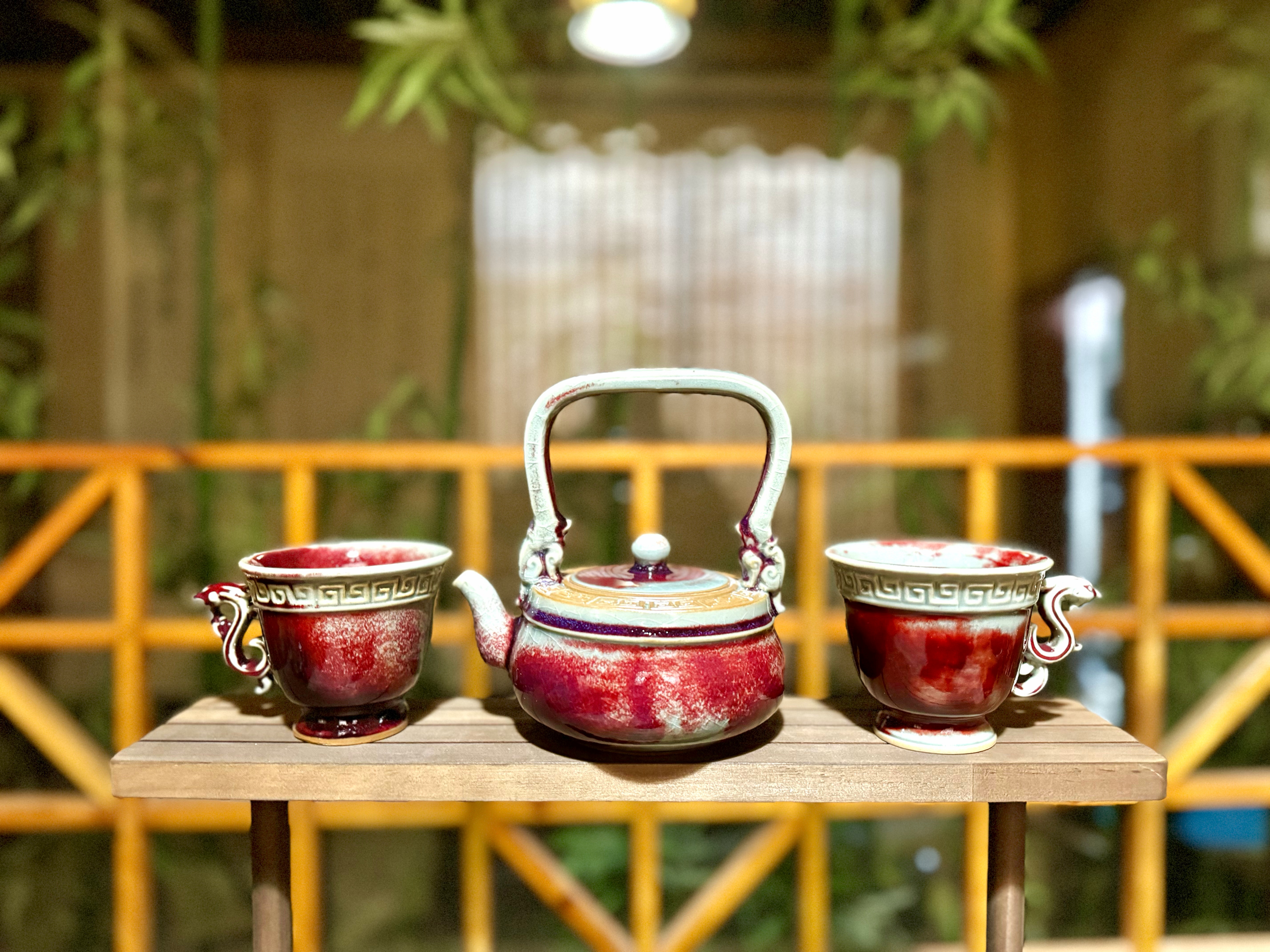
Overhead-Handle Teapot with Dragon-and-Phoenix Cups
Designed by Master Ren Jiwei, this teapot is rooted in classical Eastern aesthetics. Its soaring overhead handle arcs above the pot like a rainbow bridge, balancing the generous volume of the body while lending the piece an airy sense of openness. Where the handle meets the body, finely carved dragon motifs rise and fall with lifelike energy—layered scales curling like clouds, evoking power, good fortune, and the philosophical ideal of harmony between heaven and humankind.
The pot itself is defined by gentle, rounded curves; its full belly suggests generosity of spirit, while a short, slightly upturned spout recalls a phoenix lifting its head in song, echoing the dragon motifs above in a dialogue of “dragon’s call, phoenix’s reply.” Solemnity and movement coexist in a form that embodies the principle of stillness concealing energy.
The companion cups stand tall and upright, their rims ringed with the classic “key-fret” pattern—a continuous angular scroll symbolizing unbroken blessings, resonating with the I Ching notion that fortune circulates endlessly. The handles are especially inspired: the dragon handle coils with muscular force while the phoenix handle trails graceful feathered plumes, the two curving together in dynamic balance reminiscent of the taiji symbol—a quiet metaphor for yin and yang in harmony.
Together, the set merges the gravity of ancient bronzeware with the warmth of Song-dynasty porcelain. Three layers of meaning interweave through its decorative motifs: the dragon embodies strength, the phoenix signals good fortune, and the key-fret represents eternity—weaving a vision of “heaven, earth, and humanity in accord.” Beyond its practical function, this tea set becomes a vessel of ritual and culture, conveying through form and ornament the wish for national well-being, enduring prosperity, and abiding beauty.
Magpie Brooch
The Magpie Brooch is a Jun ware creation by Ren’s Porcelain—a pocket-sized expression of “ancient Jun, modern spirit.” At its heart lies a kiln-transformed Jun porcelain shard set against a brocade magpie silhouette, mounted on a gilt-branch base with a dangling Jun porcelain pendant. It marries the ancient art of the kiln with contemporary accessory design, reflecting the “tradition-meets-innovation” ethos of young designer Ren Haoyu. A thousand years of kiln-fire magic, condensed into something you can pin to your lapel.
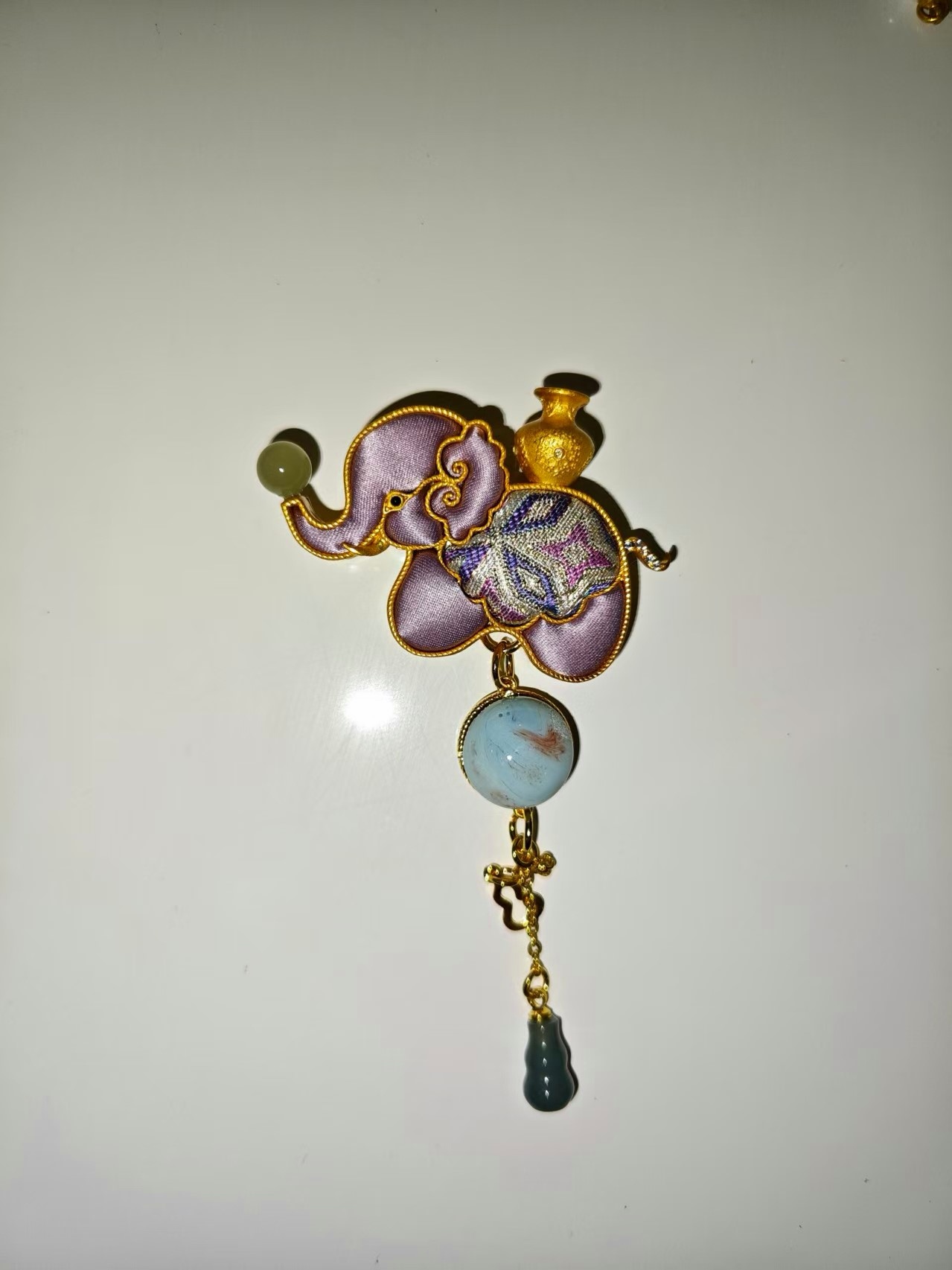
Elephant Brooch
The Elephant Brooch by Ren’s Porcelain draws on the classic motif “peace reigns where elephants roam.” The body is outlined in pale purple brocade; on its back sits a tiny gilt gourd (a pun on “fortune and prosperity”), and its trunk curls around a jade ornament. A sky-blue Jun porcelain disc and jade-gourd pendant hang below on a gilt chain. Backed by a century of the Ren family’s glaze expertise, this piece brings intangible heritage craftsmanship into wearable, new-Chinese-style form—auspicious Eastern meaning, right on your collar.
大象胸针
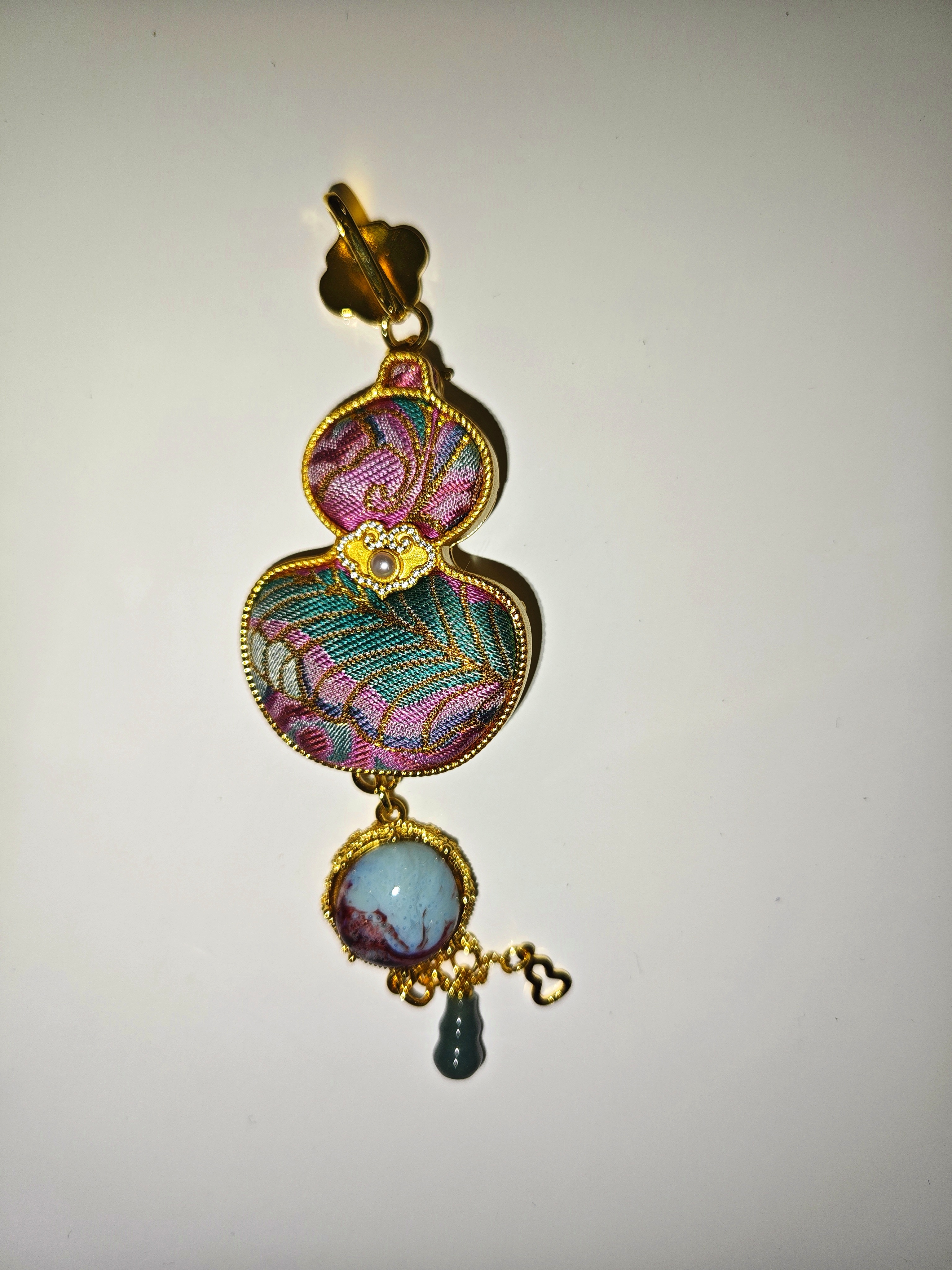
Gourd Brooch
The Gourd Brooch unites the traditional symbol of good fortune with Jun ware artistry. The gourd form is rendered in brocade—pink-violet and blue-green interwoven, framed in gilt edging—with a Jun glaze droplet accent at the join, a miniature showcase of Ren’s heritage firing techniques. A Jun porcelain disc dangles below, continuing the “art in daily life” philosophy: a century of kiln mastery meets a lightweight, wearable form, making the iridescent beauty of Jun ware an everyday companion and a symbol of Eastern aesthetics you can carry wherever you go.
葫芦胸针
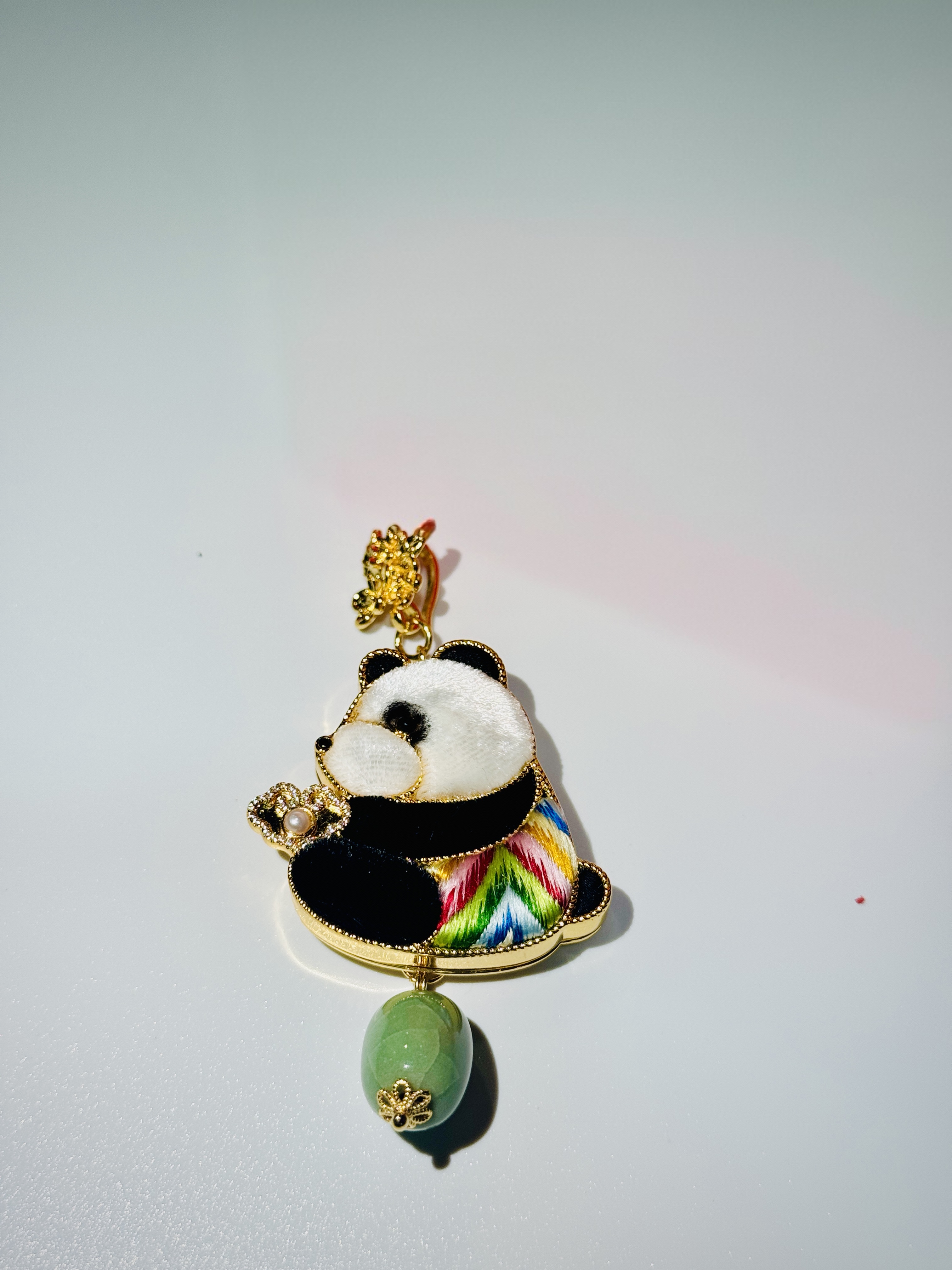
Panda Brooch
The Panda Brooch is a playful collision of intangible heritage and contemporary Chinese style. The panda figure is fashioned in brocade with gilt trim, a pearl clutched in its paw adding a lively sparkle. A bean-green Jun porcelain pendant hangs below, extending the “kiln-fire as jewelry” concept. Grounded in the Ren family’s century-old glaze mastery—the natural color play of the kiln shard is living proof of that heritage—it speaks to a younger audience, tucking the refinement of a thousand-year-old tradition into a charming, wearable accessory.
熊猫胸针