Yihan Bian Embroidery
📍 Henan
Bian Embroidery, also known as “Song Embroidery,” is a traditional handicraft originating from Kaifeng, Henan Province. It first emerged as a courtly art during the Northern Song Dynasty (960–1127 CE), when the imperial painting academy’s aesthetic ideals were translated into exquisite needlework. Today, it is celebrated for its ability to recreate celebrated paintings with needle and thread, earning its place as a national intangible cultural heritage and a timeless artistic treasure.
What distinguishes Bian Embroidery is its exceptional technical refinement: stitches so delicate they vanish into the fabric, colors so harmonious they rival painted pigments, and textures so lifelike they breathe dimension into two-dimensional surfaces. The embroidery excels particularly in depicting historical masterpieces—most notably the panoramic river scenes and bustling city life of works like Along the River During the Qingming Festival—preserving through silk and thread the cultural memory of China’s most artistically vibrant dynasties.
Along the River During the Qingming Festival
As one of China’s ten greatest surviving masterpieces of painting, Along the River During the Qingming Festival captures in breathtaking detail the bustling vitality of the Northern Song capital, Bianjing (present-day Kaifeng). This hand-embroidered interpretation by Yihan Bian Embroidery translates Zhang Zeduan’s original brushwork into an equally monumental textile achievement. Each square foot contains approximately 400,000 meticulously placed stitches, requiring months of concentrated labor by master embroiderers who have dedicated decades to perfecting their craft.
The resulting work preserves every architectural detail, every human gesture, every ripple on the Bian River—rendered not in ink but in silk thread that catches light with subtle variations impossible to achieve with paint alone. Collected by multiple museums, this is not merely a replica but a handcrafted heirloom, an artwork capable of being passed down through generations as a testament to both Song dynasty artistry and contemporary Bian embroidery mastery.
Embroidered Silk Scarf
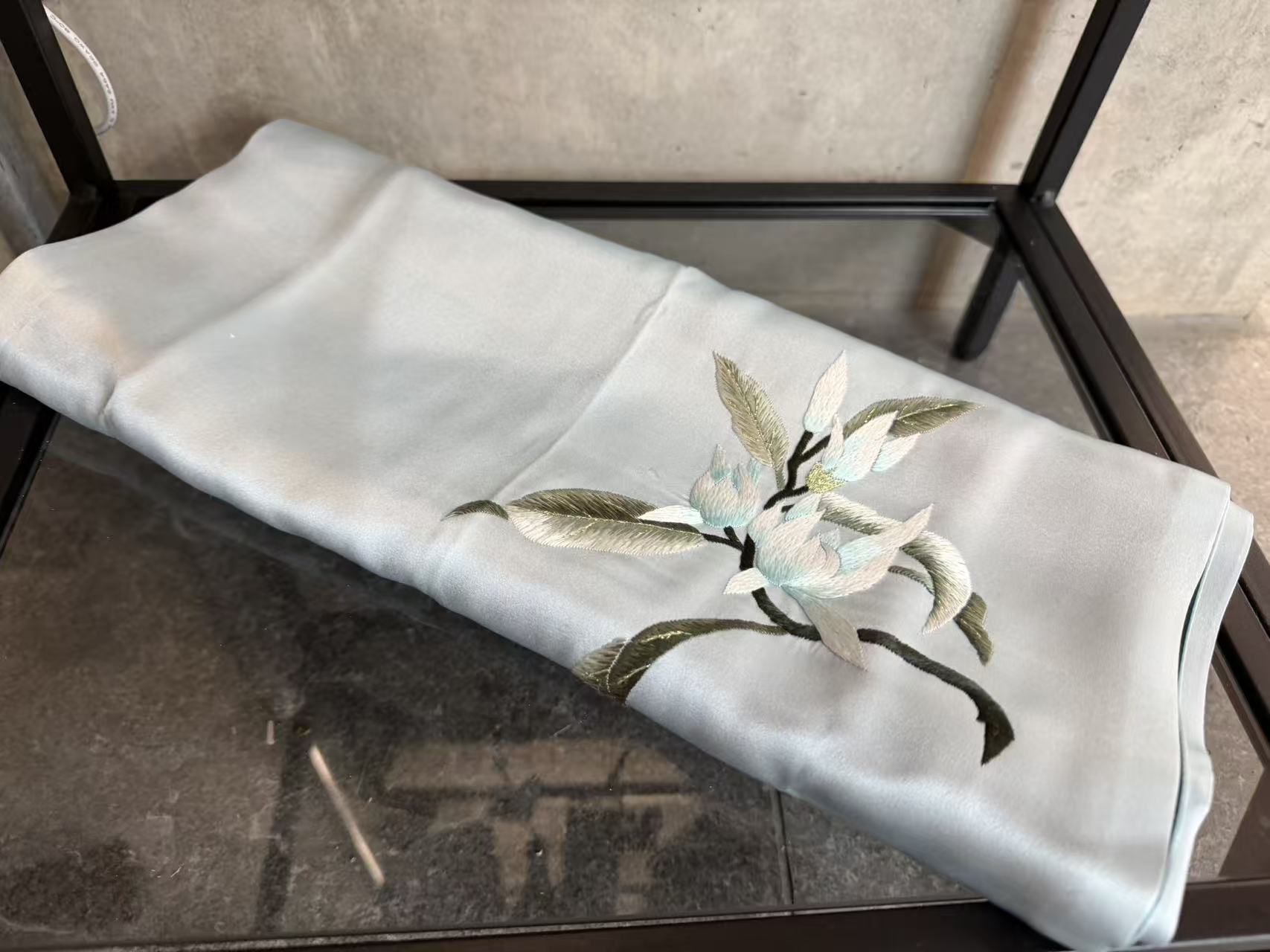
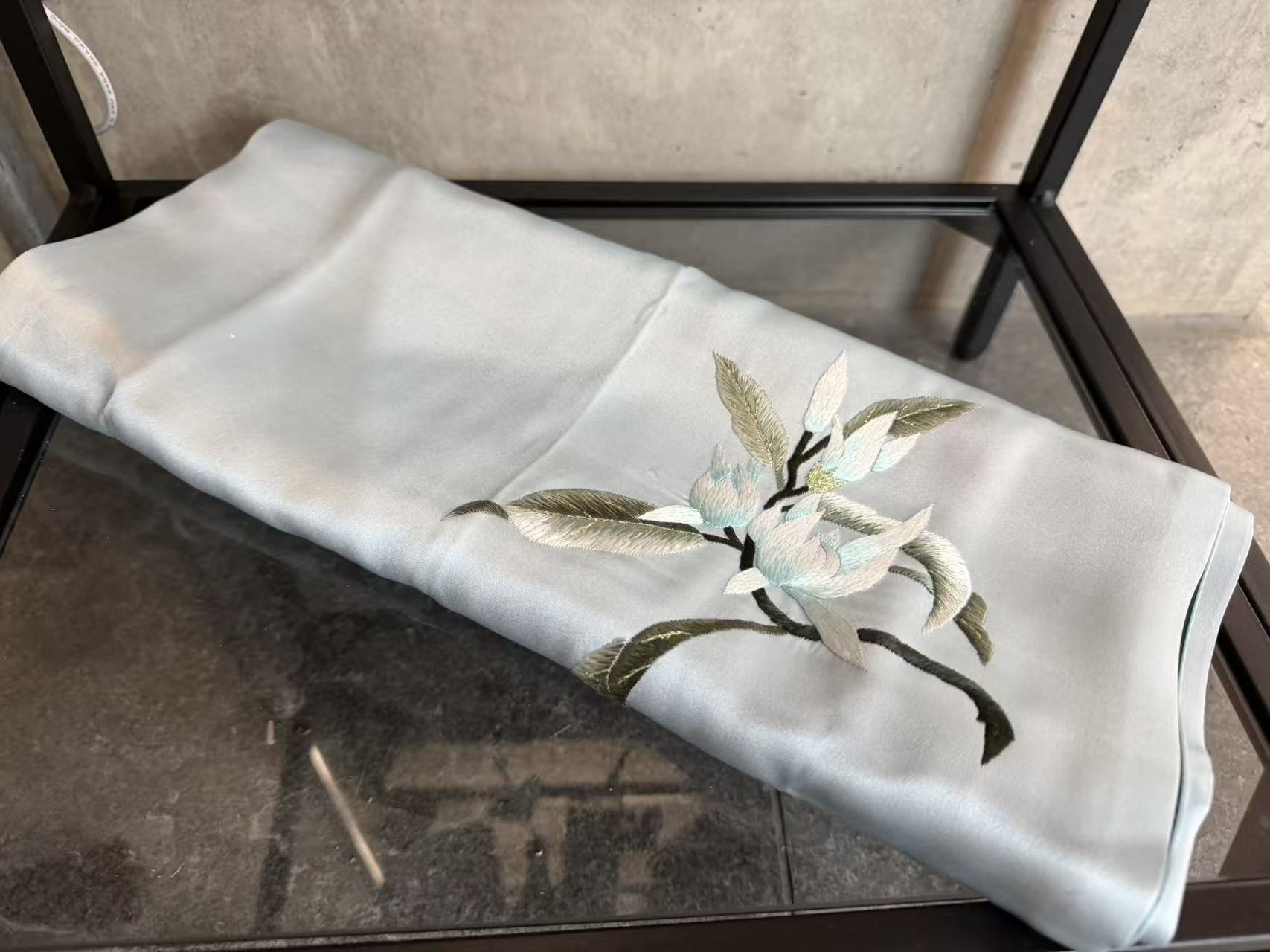
This embroidered silk scarf represents the quiet poetry of the embroiderer’s art—a meditation in thread crafted by hands shaped by decades of experience. Each stitch builds a subtle three-dimensional texture that catches light differently depending on angle and movement, creating visual depth without sacrificing the scarf’s essential softness and fluidity. The pure silk base offers a luxuriously smooth hand feel with a gentle, natural luster that complements rather than competes with the embroidery. A double-layer design ensures both durability and graceful drape, while meticulously finished edges speak to the artisan’s commitment to perfection in every detail—visible or hidden.
Embroidered Silk Scarf
Echoes of Xunyang
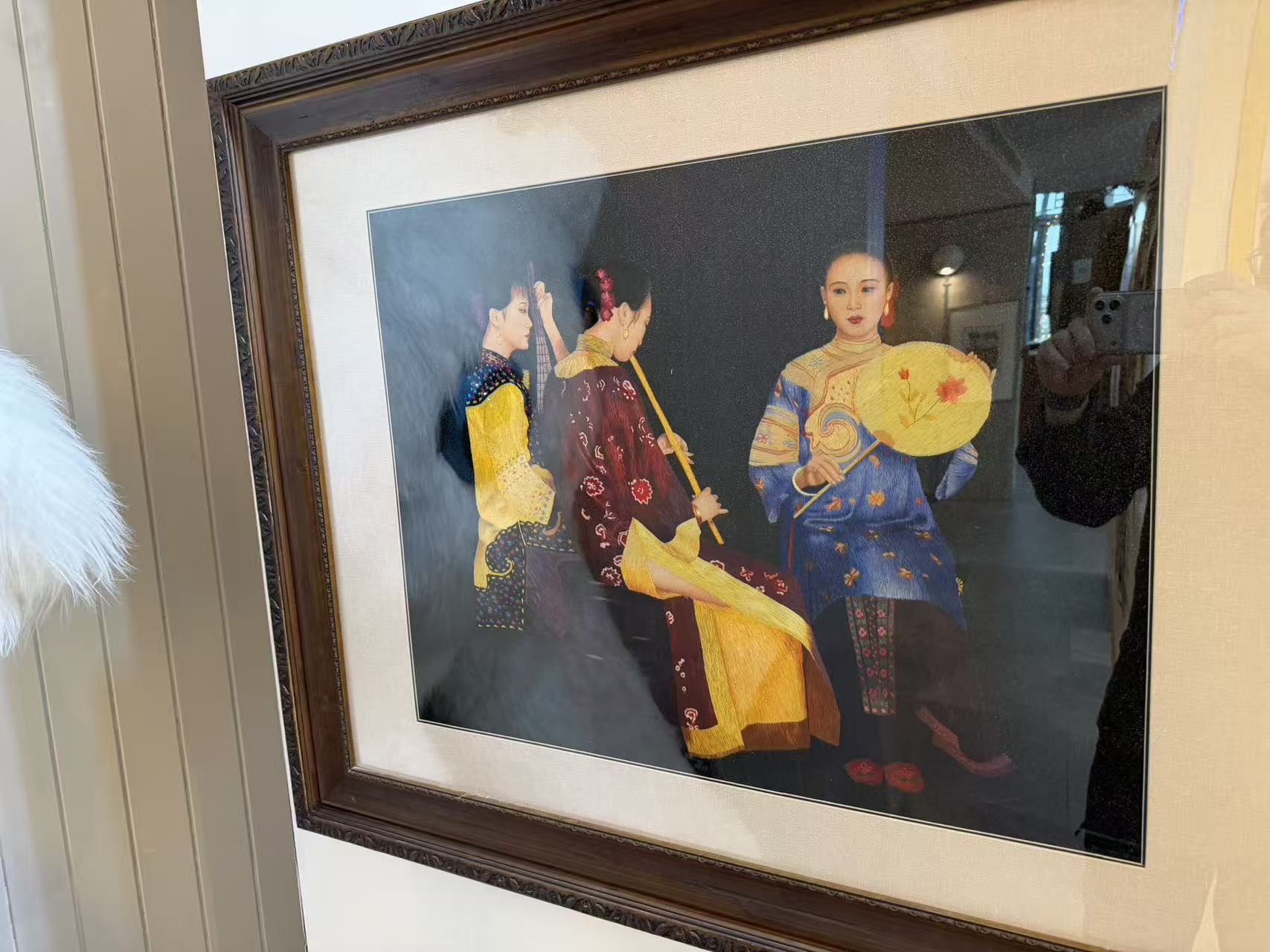
Echoes of Xunyang is a hand-embroidered interpretation of a celebrated oil painting by the renowned artist Chen Yifei, capturing the delicate beauty and melancholic elegance of Oriental women during the Republican era. Three women in qipao—traditional Chinese dresses that defined an era’s feminine ideal—hold fans or bamboo flutes, their expressions ranging from wistful longing to graceful resignation. Through the embroiderer’s art, Chen Yifei’s original painterly vision is translated into an entirely different medium while preserving every nuance of emotion and atmosphere. The embroidery achieves remarkable three-dimensionality through layered stitching techniques that build form and shadow, so that from a distance the work appears as a subtly colored oil painting. Up close, however, the individual threads reveal themselves—thousands upon thousands of them, each precisely placed to contribute to the whole. The work offers not only visual delight but also spiritual resonance, carrying viewers into a world of rich Oriental charm where melancholy and beauty intertwine.
Echoes of Xunyang