Zhu Xian Zhen Woodblock New Year Prints
📍 Zhuxian Town, Henan
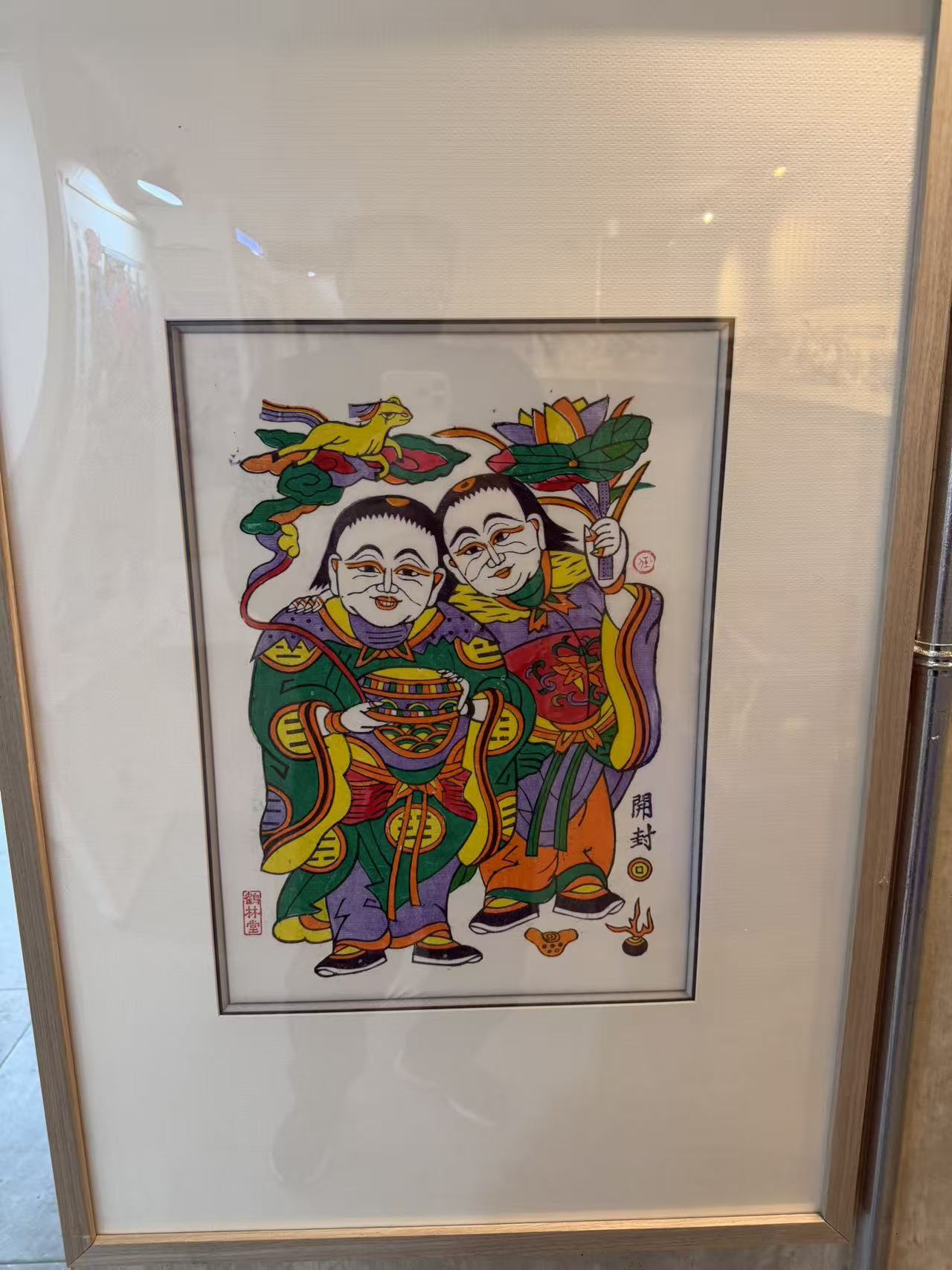
Zhuxianzhen Woodblock New Year Prints stand as one of the oldest forms of Chinese folk art, originating in the Tang Dynasty and reaching their zenith in the Northern Song capital of Bianliang. Recognised as the progenitor of Chinese woodblock printing, these works are more than mere decorations because they act as a microcosm of Northern China’s agrarian culture while capturing a profound reverence for the divine and a hopeful outlook on life. Once threatened by the onset of modern industry, this earth-bound art was saved from silence by generations of artisans who took up their carving knives to bring these vibrant colours back to life on the thresholds of Chinese homes.
The most striking feature of Zhuxianzhen prints is their rugged and unpretentious style. The compositions are exceptionally full and leave almost no empty space. Unlike the delicate aesthetics of Southern schools, Zhuxianzhen figures are characterised by large heads, short statures, and bold lines that exude a sense of primal energy. The great writer Lu Xun once praised them for being free of makeup and affectation. Equally remarkable is the palette since artisans insist on using natural pigments boiled from plants like scholar tree blossoms and sappanwood to ensure the colours remain deep and resistant to fading while carrying a faint earthy fragrance. The creation of a single print involves several rigorous stages, including sketching, carving, and manual multi-block printing. Artisans select hard pear or jujube wood to withstand the pressure of thousands of impressions. Each colour requires its own dedicated block, and the registration must be perfect because even a small misalignment can blur the image. This process, dependent on handcraft and intuition, possesses a warmth that machines can never replicate.
There is a legendary tale of finding the colour during a difficult era when traditional pigment formulas were nearly lost. Elder artisans scoured ancient texts and salvaged fragments of centuries-old prints from the ruins of old houses to rediscover the authentic, eternal red. They spent countless hours experimenting with botanical ratios in boiling pots, determined to restore the hue that could withstand the elements. It is this stubborn devotion that has preserved the most passionate colours of the Central Plains.
Masterpieces like Infantry Duel feature the majestic figures of Qin Qiong and Yuchi Gong standing guard over the household, while Five Sons Competing for the Top Rank depicts playful children vying for a prize to embody wishes for the success of future generations. These works are not just visual treats but emotional anchors.
The significance of Zhuxianzhen woodblock prints transcends paper and ink. They represent a dialogue between man and the divine as well as a vessel for nostalgia and a testament to the resilience of the Chinese spirit. They remind us that no matter how the times change, the cultural DNA carved into wood and bled into paper will always remain our spiritual home.
Gallery